Societal Challenges
Business & Corporate Responsibility
Civil Society & Governance
Employment, Workplace Culture & Corporate Environment
Business Ethics & Leadership
Post-Doctoral Fellowships
France
2018.02.28
Does hierarchy influence our behaviour in risky situations?
Investigating risky decision-making using NeuroErgonomics
To conduct her study, the researcher uses methods from Neuroergonomics, an emerging scientific field that applies neuroscience to ergonomics. Using both electroencephalogram (EEG) monitoring to measure brain activity in the cockpit, as well as various questionnaires, Dr. Eve Fabre intends to provide new insight on risky decision-making. Her findings will help develop innovative tests to measure the sensitivity of trainee pilots to hierarchy. «These could be used during the selection process, together with new training programs that will lower risk-taking related to hierarchy in the cockpit », Dr. Eve Fabre specifies.
Technological speaking, planes are becoming safer. Human error in degraded situations, rather than mechanical failure, underlies most aviation accidents. But when it comes to "human factors" – a term increasingly used in the aviation field –, finding solutions to address our shortcomings is an ongoing and complex endeavour. By aiming to fill the knowledge gap concerning the impact of hierarchy on risk-taking in a cockpit, Dr. Eve Fabre’s objective is to contribute to increasing aviation safety, but not only that. Her findings will constitute a starting point to investigate the impact of hierarchy on risk-taking in other strategic fields like management, economics or finance.
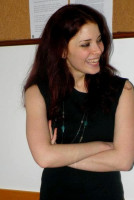
Eve
FABRE
Institution
Institut Supérieur de l'Aéronautique et de l'Espace
Country
France
Nationality
French
Related articles

Societal Challenges
Artificial Intelligence & Emerging Technologies
Civil Society & Governance
Polarization & Social Divides
Ethical AI & Responsible Innovation
Post-Doctoral Fellowship
Hong Kong
Impact of Misinformation & Mistrust on Environmental Issues & Democracy: A Comparative Study
Environmental disasters and the way information about them is shared can affect how well democracy works and how people get... Read more

Minos Athanasios
KARYOTAKIS