Artificial Intelligence & Emerging Technologies
Machine learning
Earthquakes & Seismic Hazards
AXA Chairs
China
2019.04.22
Combating Natural Disasters with Remote Sensing Data & Artificial Intelligence
Professor Jocelyn Chanussot, AXA Chair in Remote Sensing, has embarked on the development of advanced algorithms to monitor for the warning signs of various natural disasters and coordinate targeted emergency response efforts. A crucial element of his work will be to enable the processing of vast amounts of heterogeneous data, including aerial photos, multispectral and hyperspectral images, electromagnetic waves, soundwaves, and more.
Natural disasters, which have increased with alarming frequency due to climate change, are one of the gravest threats to human society and the environment. Whether in the form of floods, landslides, earthquakes, wildfires, or otherwise, in the decade from 2005 to 2014 these disasters killed 700,000 people and caused 1.4 trillion USD in damage. In order to reduce loss of life and destruction, better prediction of and response to catastrophes is needed.
Fortunately, today our capacity to observe our environment is unparalleled, with satellites and drones collecting numerous types of data with a frequency never before seen, and social media providing real-time crowdsourced data of events on the ground. Artificial intelligence also promises to enable us to draw meaningful insights from these large datasets quickly and efficiently. Professor Jocelyn Chanussot, AXA Chair in Remote Sensing, has embarked on the development of advanced algorithms to monitor for the warning signs of various natural disasters and coordinate targeted emergency response efforts. A crucial element of his work will be to enable the processing of vast amounts of heterogeneous data, including aerial photos, multispectral and hyperspectral images, electromagnetic waves, soundwaves, and more.
Comprehensive tools for predicting natural disasters and creating the most effective response strategies when they do occur can not only reduce the destruction they cause, but save lives in the process.
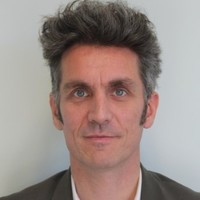
Jocelyn
CHANUSSOT
Institution
Chinese Academy of Science
Country
China
Nationality
French
Related articles
Societal Challenges
Artificial Intelligence & Emerging Technologies
Civil Society & Governance
Polarization & Social Divides
Ethical AI & Responsible Innovation
Post-Doctoral Fellowship
Hong Kong
Impact of Misinformation & Mistrust on Environmental Issues & Democracy: A Comparative Study
Environmental disasters and the way information about them is shared can affect how well democracy works and how people get... Read more

Minos Athanasios
KARYOTAKIS